

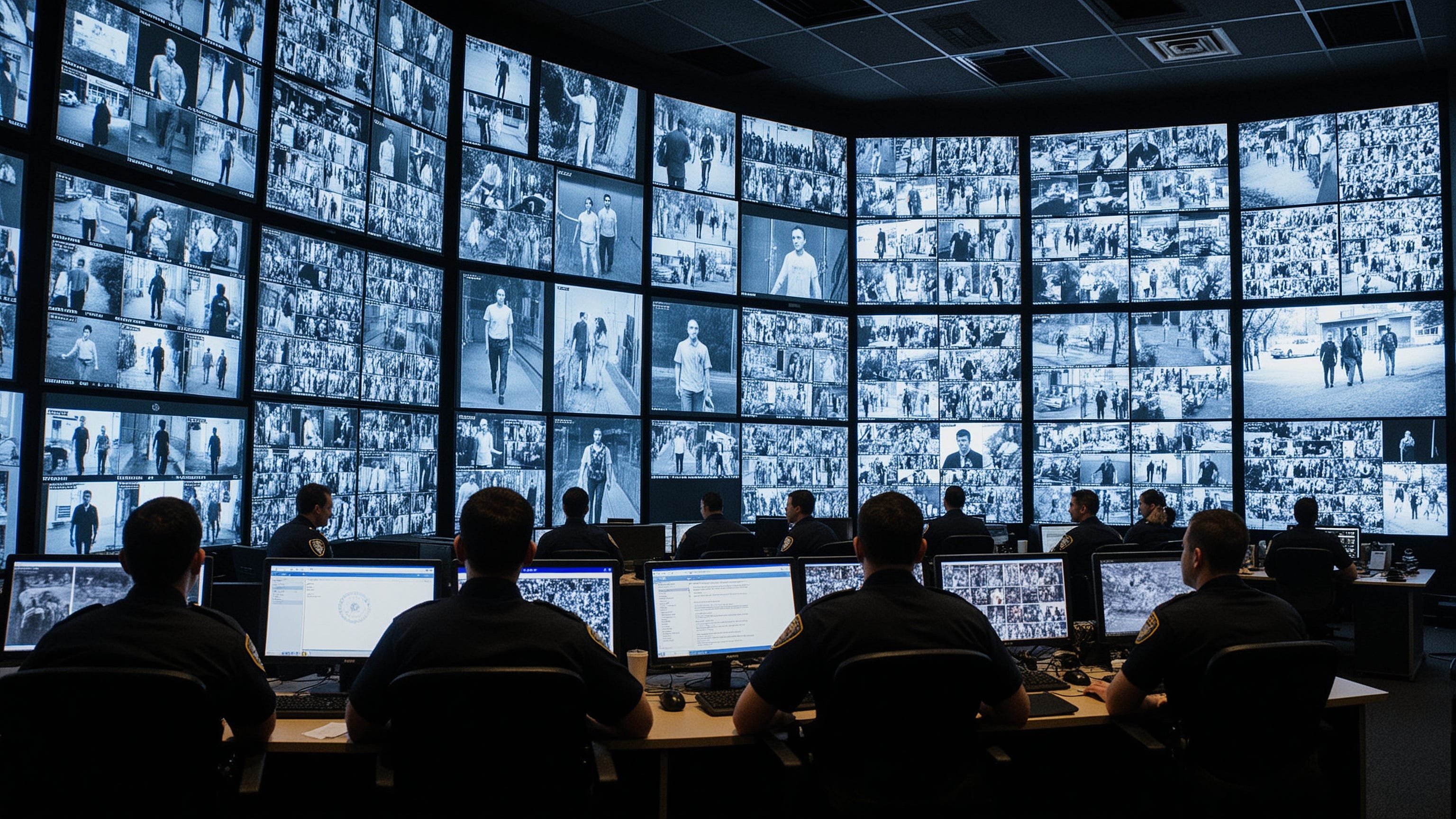
Your Body Heat is Government Property
Wine loosened the tongue that evening in 2018. Byron Tau sat in a restaurant he cannot name, watching candlelight fracture through crystal while a source he cannot identify spoke of commerce. Not arms deals. Not narcotics. Something worse. By August 2026, that whispered confession has metastasized into infrastructure. The United States government now operates as the world’s most prolific consumer of human data, purchasing location history, search queries, purchase records, and biometric signatures from brokers who harvest them from devices Americans carry voluntarily. Utah’s data centers store exabytes of this material. Algorithms digest human experience into risk scores. Federal agencies shop for your life the way you shop for groceries.
What Follows: Five Technologies Currently Deployed Against American Civilians
FLIR thermal imaging systems that map your movements through walls via body heat differential, rendering curtains and drywall irrelevant.
RANGE-R radar devices that detect respiration through concrete, creating three-dimensional occupancy maps before entry teams breach.
FADS backscatter scanners that digitally strip clothing, exposing medical devices and intimate anatomy to electromagnetic surveillance mounted in vehicles.
Z-Backscatter vans that X-ray buildings and vehicles from public streets, revealing interior contents down to label text.
Ground-penetrating radar that eliminates subterranean privacy, exposing buried assets and underground structures without warrant or notification.
Heat Signatures and Other Betrayals
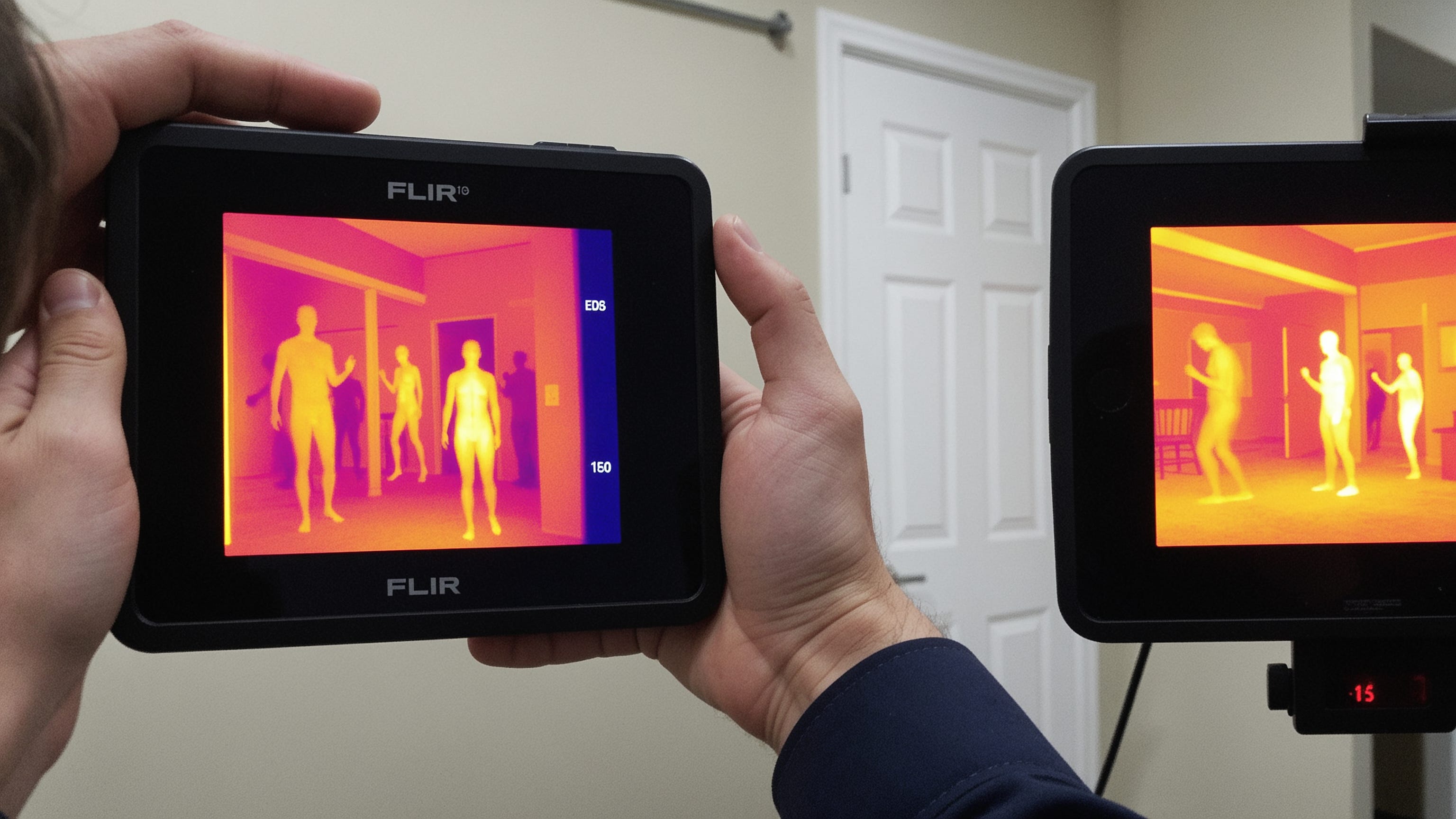
Three in the morning finds you thirsty. Kitchen tiles chill your bare feet. Outside, tinted glass hides a patrol car idling three houses down. Inside that vehicle, an officer aims a device no larger than a paperback through your exterior wall. He watches your warmth move across his screen. Not your face. Not your form. An orange-yellow blob traversing what should be private space. Your 98.6-degree biology becomes evidence. Your involuntary radiation becomes probable cause.
Forward Looking Infrared technology migrated from Apache gunships to suburban police fleets with disturbing efficiency. The Supreme Court attempted restraint in Kyllo v. United States (2001), ruling that thermal imaging through walls constituted Fourth Amendment search requiring warrant. Departments responded by obtaining warrants—or claiming exigent circumstances—or ignoring oversight where accountability failed. Devices now cost less than departmental SUVs. Your body produces heat constantly, unavoidably, involuntarily. This biological function serves as beacon for observation, rendering the locked door an architectural fiction.
Neighborhood drones already map family heat signatures through bedroom windows. Bathroom occupancy becomes data. Marital intimacy registers as thermal spikes. Shower duration creates patterns. You radiate. Therefore you are detected. Therefore you are catalogued.
Breathing as Evidence
Corporal Hicks carried something similar in James Cameron’s Aliens—that handheld tracker beeping as monsters moved through spacecraft walls. Fiction became hardware. Reality exceeded it.
RANGE-R devices emit radar waves tuned specifically to detect breathing. Not movement. Respiration. A child’s rising chest at 2 AM. An insomniac’s shallow breath over a book. Couples frozen in separate rooms, holding air during argument. These signatures penetrate concrete, brick, drywall—the accumulated barriers we call sanctuary.
USA Today broke the story in 2015. Marshals Service had deployed these units for years without disclosure, locating fugitives before entry. FBI adopted them for warrant executions. Local departments now rent from federal inventories when serving routine warrants on nonviolent offenders, claiming officer safety demands occupancy knowledge. Devices generate three-dimensional wireframe maps of interior spaces. Furniture positions become known. Room occupancy becomes known. Your solitude or companionship becomes known. All this precedes the door breaking.
RADAR VISION 2, the two-handed variant, detects motionless humans through brick at one hundred feet. It distinguishes adults from children by breathing patterns. It identifies multiple occupants and their positions relative to walls, doors, escape routes. Constitutional violations become so flagrant that explanation seems redundant: government maps your home interior without entering, without announcing, often without warrant, then claims this constitutes no search because nothing physical was touched.
Mobile Transparency
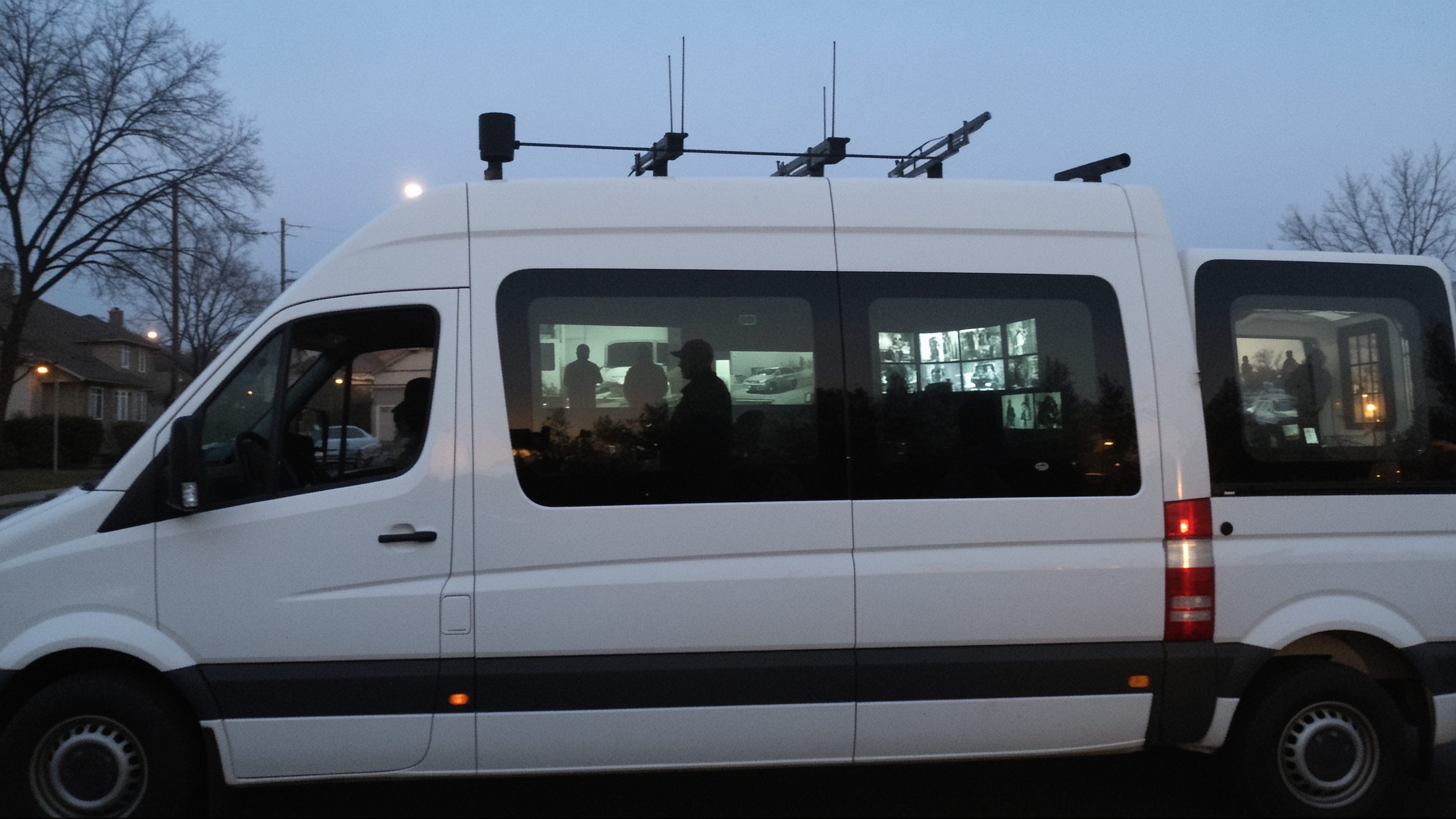
AS&E Corporation manufactures them—same entity that built TSA’s original body scanners. Z-Backscatter Vans represent mobile X-ray units disguised as delivery vehicles. Several hundred operate nationwide by August 2026. Private security firms purchase and rent access to police departments, circumventing budget constraints that might otherwise limit deployment.
White Mercedes Sprinter vans with concealed antenna arrays park on your street. You see nothing. You hear nothing. You feel nothing. Yet your vehicle, your home, your body undergoes X-ray examination from the curb. Backscatter technology reflects off organic material and dense objects, creating photographic-quality images of spaces that should remain opaque. Drugs and explosives become distinguishable. Specific firearms become identifiable by shape. Text on labels inside packages becomes readable. Radiation doses remain small, the government claims, as if that addresses the fundamental violation.
Ground Penetrating Radar completes the architecture. Originally developed for archaeology and utility location, GPR migrated to law enforcement with predictable efficiency. Equipment emits electromagnetic pulses into earth, analyzing reflections to detect soil disturbances, voids, buried objects, structural anomalies. Individuals believing underground caches represent security find those illusions shattered. Forty feet of depth surrender easily. Buried containers appear as distinct anomalies against soil patterns. Earth itself becomes transparent.
Open fields doctrine—established Hester v. United States (1924)—holds that warrantless searches of undeveloped land violate nothing. GPR enables comprehensive land mapping from public roads without physical presence, without warrant, without notification. Intelligence gathered without judicial oversight subsequently generates warrants, rubber-stamping already-executed searches.
August 2026: No Interior Remains
Five years have passed since Tau’s dinner. Eight years since USA Today’s RANGE-R revelation. Two decades since Kyllo attempted restraint. The surveillance state no longer purchases data—it harvests automatically, continuously, inevitably.
Your breath penetrates concrete. Your heat radiates through walls. Your clothing becomes transparent to passing vehicles. Your land becomes transparent to electromagnetic pulses. Each biological function—respiration, thermoregulation, movement—becomes evidence against you. Each architectural protection—walls, locks, earth, distance—becomes permeable.
Benjamin Franklin’s warning persists: those trading liberty for safety deserve neither. Yet the trade continues. The wine was good in 2018. The source spoke of purchases. By August 2026, the architecture is complete. You produce data constantly, involuntarily, unavoidably. The only question remaining is whether anything exists that has not been touched by electromagnetic waves, processed by algorithms, entered into databases that remember forever what you might prefer to forget.
And whether the absence of such untouched space means something has ended.
Well, this is grim.
Have to wonder how long before they can read our thoughts.